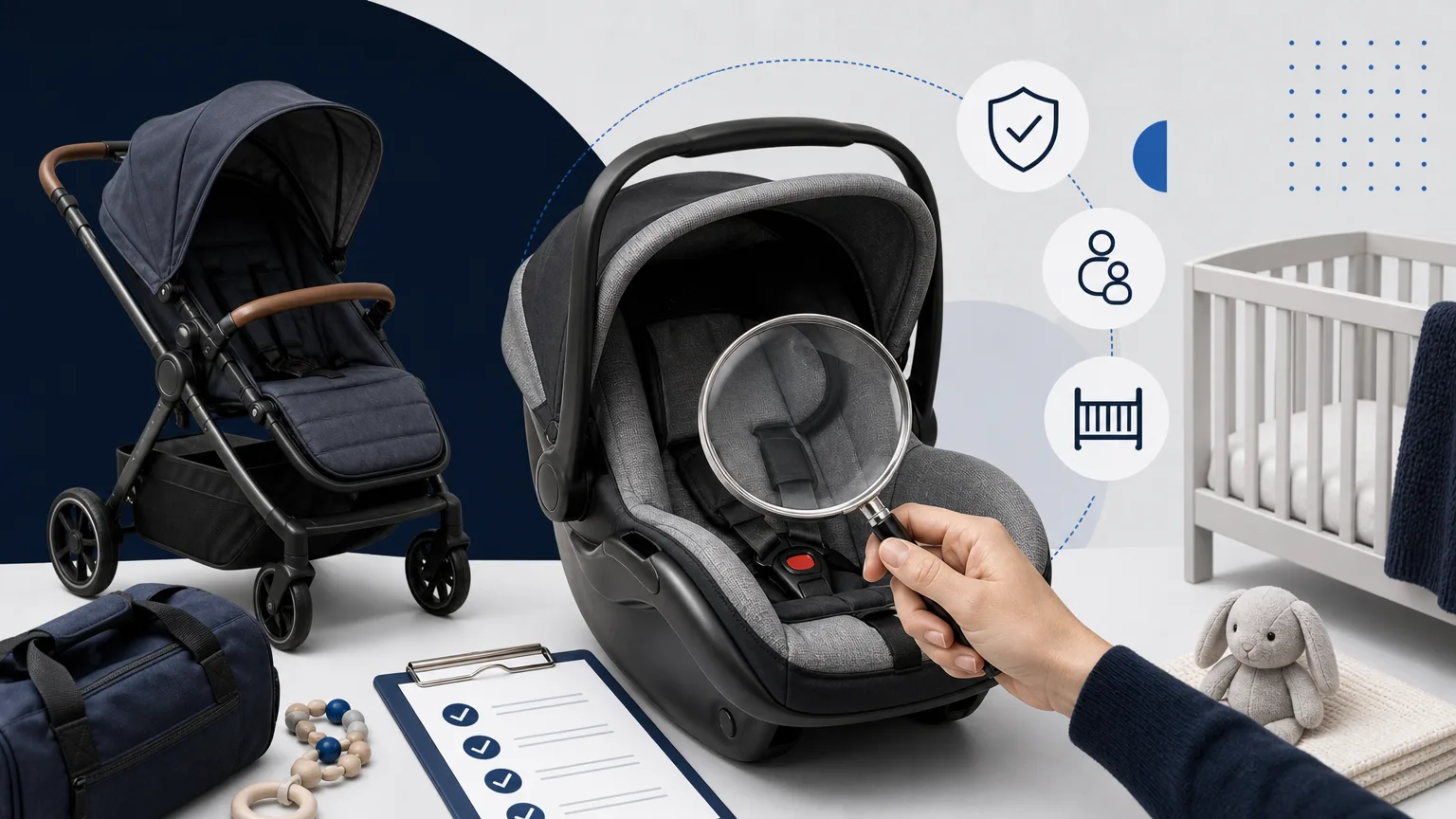
Secondhand baby gear can save money, but the safest used purchase is the one you can identify, inspect, and use exactly as intended.
Start with the category, not the price
If the item is part of a baby’s sleep setup, be conservative. In the U.S., CPSC says infants should sleep on a firm, flat surface with only a fitted sheet, and its 2024 nursery-products report says unsafe sleep environments remain a major source of injuries and deaths. HealthyChildren, from the American Academy of Pediatrics, also says inclined sleepers are unsafe for infant sleep. (cpsc.gov)
That means the safest secondhand move is usually to avoid used sleep gear unless you can confirm it is a current product that meets today’s rules and is complete, undamaged, and free of recalls. For anything you cannot verify, buying new is the safer choice in the U.S. (cpsc.gov)
What should usually stay new
Car seats
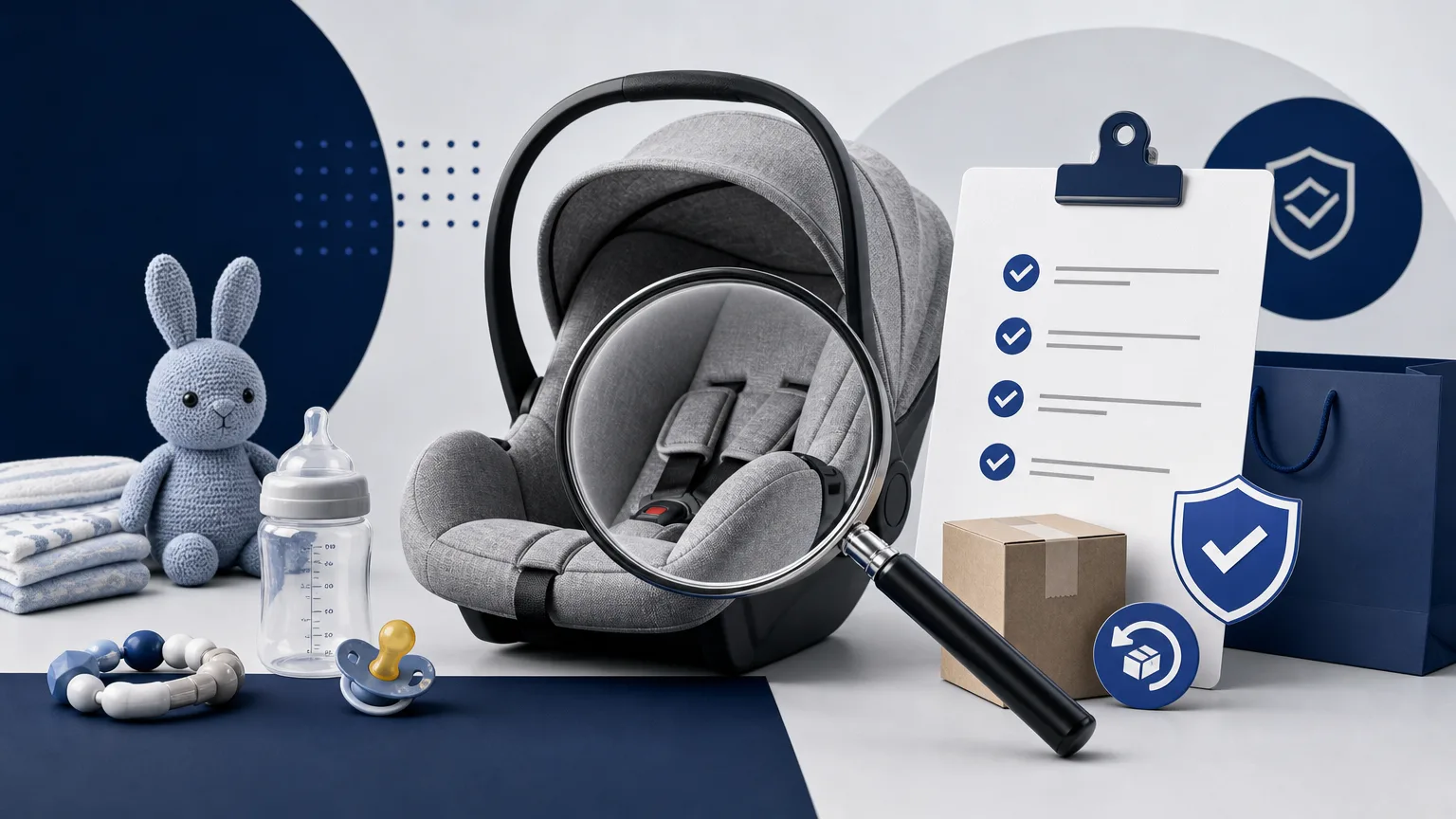
Treat used car seats with extra caution. NHTSA says a secondhand seat should never have been in a moderate or severe crash, should have labels showing the date of manufacture and model number, should have no recalls, and should include all parts. If you cannot confirm those points, skip it. (nhtsa.gov)
Infant sleep products you cannot verify
Avoid any used sleep product that is missing parts, has unapproved extras, or does not clearly match a current safe-sleep design. CPSC says babies should sleep in a bare, flat sleep space, and its resale guidance says secondhand buyers should check recalled products before purchase. (cpsc.gov)
Older cribs with unclear compliance
CPSC says federal crib safety standards became mandatory on June 28, 2011, and that cribs manufactured or sold before that date are very likely noncompliant, unsafe, and illegal to sell or distribute into commerce in the U.S. If you cannot confirm the crib is compliant, choose a new one instead. (cpsc.gov)
What can often be reasonable to buy used
Strollers and similar wheeled gear
Strollers are often more reasonable secondhand buys than car seats or sleep products, but only if the frame is sound and the brakes, folding lock, harness, and wheels all work. CPSC’s stroller guidance says strollers must meet federal safety standards, including protections for hinge closures, tip-overs, harness or handlebar failures, and braking or locking failures. (cpsc.gov)
Awake-time play gear
Some gear is fine for supervised awake-time use but not for sleep. HealthyChildren says swings, rockers, bouncers, gliders, and similar products are not safe sleep spaces, and CPSC says babies who fall asleep in those products should be moved to a firm, flat sleep surface. (healthychildren.org)
The exact checks to do before you pay
- Ask for the brand and model first. You need both to check recalls and confirm the item is the exact product being sold. (nhtsa.gov)
- Check recall status before money changes hands. CPSC tells sellers and resellers to check CPSC recalls before offering used products for sale, and it says recalled products must not be sold in the U.S. (cpsc.gov)
- Inspect for missing parts. Missing straps, clips, fasteners, inserts, or instructions are warning signs. NHTSA specifically requires all parts and instructions for a used car seat. (nhtsa.gov)
- Look closely for damage. Bent frames, cracks, loose joints, broken locks, or frayed straps are dealbreakers for many baby products because they can affect how the item performs. CPSC’s resale guidance highlights failures such as broken mechanisms and missing parts in nursery and child products. (cpsc.gov)
- Treat crash history as a dealbreaker for car seats. NHTSA says a seat involved in a moderate or severe crash should not be used. (nhtsa.gov)
- Do not add soft extras to sleep products. CPSC says safe sleep means a firm, flat surface with only a fitted sheet, not pillows, bumpers, quilts, or similar soft bedding. (cpsc.gov)
Simple decision rule
- Buy new: car seats, anything used for infant sleep that you cannot fully verify, and older cribs you cannot confirm meet current U.S. standards. (nhtsa.gov)
- Buy used only after careful inspection: strollers and other wheeled gear that are complete, structurally sound, and not recalled. (cpsc.gov)
- Do not use for sleep even if they look comfortable: swings, rockers, bouncers, gliders, and inclined sleepers. (healthychildren.org)
The best secondhand purchase is not the cheapest one. It is the item you can verify, inspect, and use exactly as intended. For more practical shopping checklists, see /explore. (cpsc.gov)