Why USB-C charger shopping needs extra caution
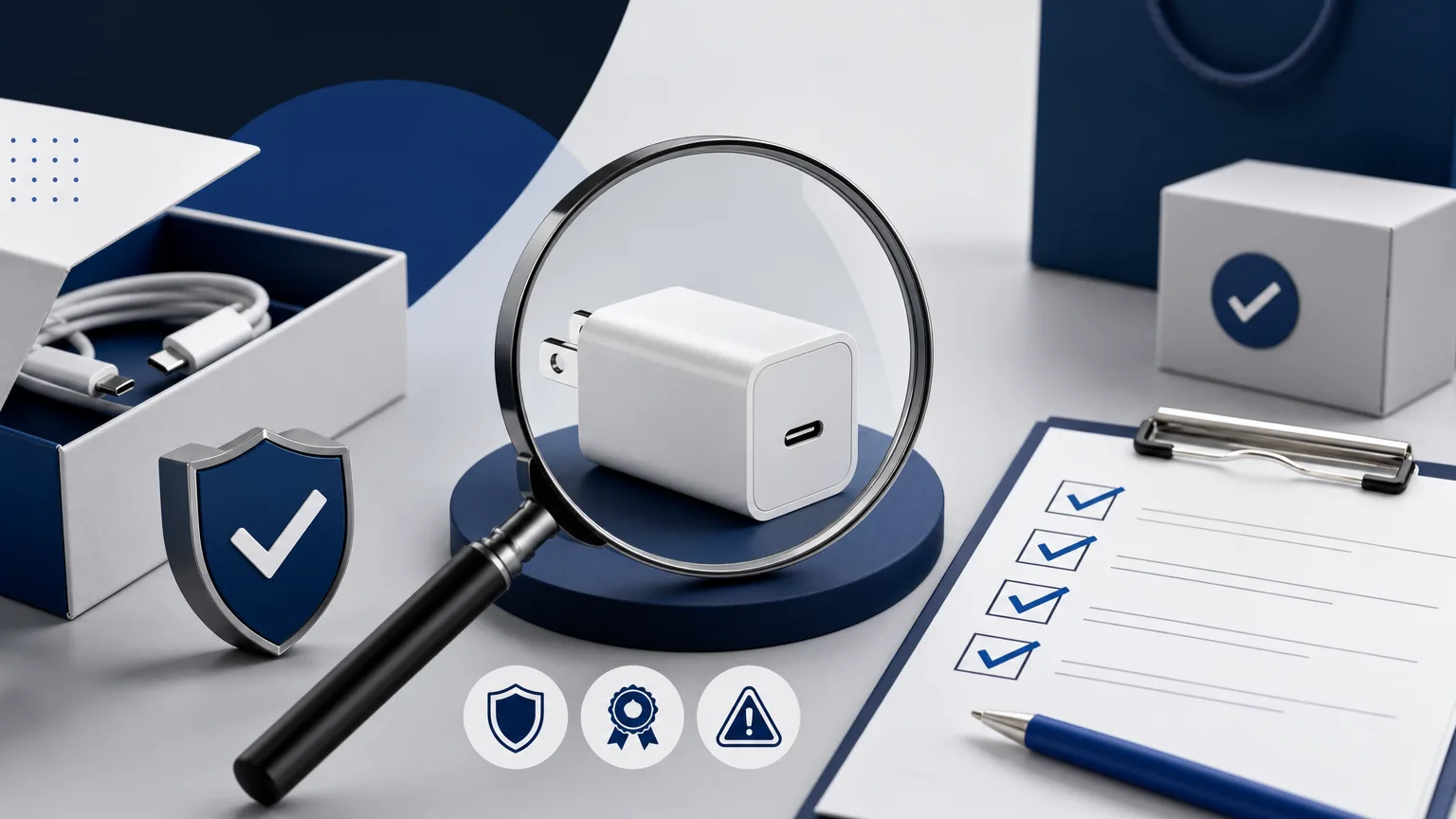
A USB-C phone charger should be a simple purchase, but marketplace listings can hide important differences between a legitimate charger and a risky counterfeit. U.S. CPSC guidance warns that counterfeit electrical products can pose fire, shock, and electrocution risks, and recommends looking for a certification mark from an independent testing organization plus the manufacturer’s label. Which? also reported in June 2026 that chargers bought from several marketplaces included products with shock, fire, and explosion risks, and that some lacked key information on the product, packaging, or paperwork. That does not mean every marketplace charger is unsafe. It does mean shoppers need a quick way to separate clear, well-labeled listings from vague ones. (cpsc.gov)
The safest approach is to look for evidence, not just sales language. Consumer Reports and BBB both advise checking seller information, reviews, and contact details before buying, especially on marketplaces where third-party sellers may be harder to distinguish from the platform itself. If you cannot tell who is selling the charger, how to reach them, or what exactly is being sold, that is a reason to slow down. (consumerreports.org)
The fastest way to screen a charger listing
If you only have a minute, use this simple check before you buy a USB-C charger online.
1) Look for a specific safety mark, not a vague promise
CPSC says shoppers should scrutinize the product, the packaging, and the labeling, and look for a certification mark from an independent testing organization along with the manufacturer’s label. UL has also warned about counterfeit UL marks on USB power adapters, showing that a logo can look familiar while still being fake. That is why a logo alone should not be treated as proof of safety. (cpsc.gov)
A useful shopper rule is this: if a listing claims the charger is “safe,” “certified,” or “tested,” but does not show a recognizable mark and a clear manufacturer name, treat that as weak evidence. That is an inference from CPSC’s counterfeit guidance and UL’s counterfeit-mark warning. (cpsc.gov)
2) Check who is selling it
BBB recommends looking for company information and valid contact details, and being cautious when basic business details are missing. Consumer Reports likewise notes that marketplace seller pages may provide limited feedback, contact information, or return details. For charger shopping, that matters because a suspicious listing can be hard to trace once the order is placed. (consumerreports.org)
3) Treat an unusually low price as a warning sign
Consumer Reports says unusually low prices can be a counterfeit clue, and CPSC warns that counterfeit electrical products may be inferior and unsafe. A bargain is not automatically bad, but a deal that seems too good to be true deserves extra scrutiny, not less. (consumerreports.org)
What labeling details are worth checking
Not every logo or marketing phrase means the same thing.
- Independent testing mark: CPSC specifically recommends looking for a certification mark from an independent testing organization. That is the strongest general safety clue in the sources reviewed here. (cpsc.gov)
- Manufacturer name and model number: CPSC’s counterfeit guidance emphasizes labeling and the manufacturer’s label. If the charger, box, or paperwork does not clearly identify the maker and model, that is a problem. (cpsc.gov)
- Consistent seller information: BBB and Consumer Reports both emphasize the value of contact details, feedback, and return information. If the seller page feels incomplete or evasive, do not assume the product behind it is trustworthy. (consumerreports.org)
A practical reading rule: if the listing leans heavily on a logo but gives you little else — no clear manufacturer, no model number, no contact information, or no consistent seller details — that is a warning sign worth acting on. That is a judgment call based on the safety guidance above, not a direct rule stated by any one source. (cpsc.gov)
Marketplace red flags that should make you walk away
The seller is hard to identify
BBB says reputable online sellers provide company information and valid contact details. If those basics are missing, the listing is harder to verify and harder to hold accountable if the product turns out to be unsafe or counterfeit. (consumerreports.org)
The listing says “certified” but does not say certified by whom
CPSC’s advice is to look for a specific certification mark from an independent testing organization, not a broad claim with no named verifier. A vague certification claim is weaker than a real mark you can inspect. (cpsc.gov)
The photos, packaging, and text do not line up
UL’s counterfeit-mark warning showed that a charger can look similar to an authorized product while still carrying a counterfeit mark. Which? also found that the chargers it tested often lacked required information on the product or packaging. If the item, box, and listing do not tell the same story, that is a reason to back away. (ul.com)
The price looks far below normal
Consumer Reports says unusually low prices can be a counterfeit clue, and CPSC warns that counterfeit electrical products may be inferior and unsafe. A steep discount is not proof of fraud, but it is a reason to slow down and verify the seller and labeling more carefully. (consumerreports.org)
After delivery: what to check before you plug it in
If the charger already arrived, inspect it before using it.
First, look for the manufacturer name and other identifying details on the charger, package, or documents. CPSC advises shoppers to scrutinize the labeling and look for the manufacturer’s label. (cpsc.gov)
Second, inspect the safety mark closely. If it looks blurry, inconsistent, or copied from a brand you do not recognize, UL’s counterfeit-mark warning is a reminder to stop and verify before use. (ul.com)
Third, compare the item against the listing. If the product you received does not match the photos, description, or seller information, treat that mismatch as a warning sign. That is a practical inference from CPSC’s counterfeit guidance, UL’s counterfeit-mark example, and Which?’s findings about missing product information. (cpsc.gov)
Finally, if the charger is physically damaged, smells burnt, or behaves abnormally during first use, stop using it. CPSC’s counterfeit guidance and UL’s warning both point in the same direction: if a charger looks wrong, do not keep testing it. (cpsc.gov)
What to do if a charger looks suspicious
- Unplug it and stop using it. CPSC warns that counterfeit electrical products can create serious fire, shock, and electrocution risks. (cpsc.gov)
- Save the listing, photos, packaging, and order confirmation. BBB’s shopping guidance stresses the value of clear seller information, and keeping your own records helps if you need a refund or need to document the problem. (consumerreports.org)
- Contact the seller and the marketplace. Consumer Reports advises shoppers to use marketplace seller profiles and complaint or return processes when counterfeit concerns arise. (consumerreports.org)
- Report serious safety concerns. CPSC provides consumer reporting channels, including SaferProducts.gov, for hazards and unsafe products. (cpsc.gov)
A simple decision path for safe USB-C charger buying
Use this quick test before you buy:
- Do I know who the seller is? If not, be cautious. (consumerreports.org)
- Does the listing show a specific safety mark from a recognized testing body? If not, move on. (cpsc.gov)
- Do the manufacturer name, model, photos, and packaging details look consistent? If not, skip it. (cpsc.gov)
- Does the price look unrealistically low? If yes, assume extra risk until you verify it. (consumerreports.org)
- Can I buy the same charger from a trusted retailer or directly from the brand? If yes, that is usually the safer route. That is a practical shopping preference based on the seller-verification advice above. (consumerreports.org)
The safest USB-C phone chargers are usually the least mysterious ones: clear seller, clear manufacturer, clear labeling, and a real safety mark you can inspect. If a charger leaves you guessing, keep scrolling. For more practical shopping checks, see /explore. (cpsc.gov)